
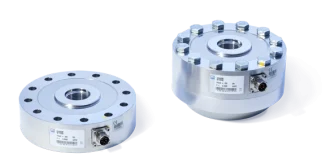
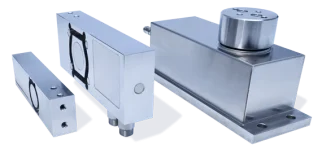
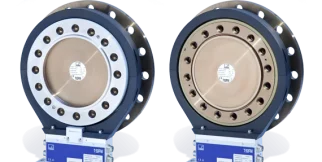











U15 Force
U15: sensors and measurement devices by HBK for force.
This series on the HBK site (opens in a new tab)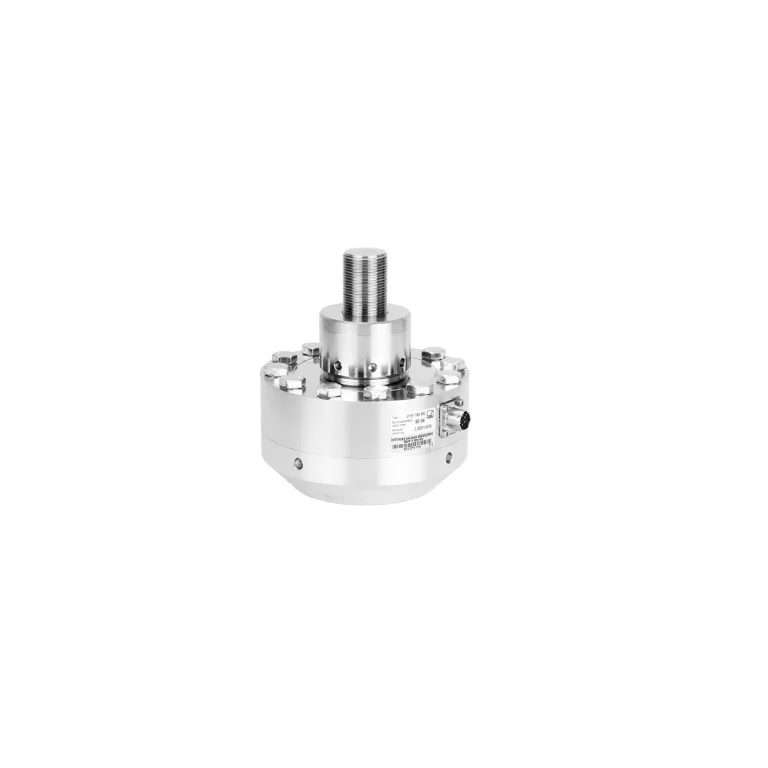
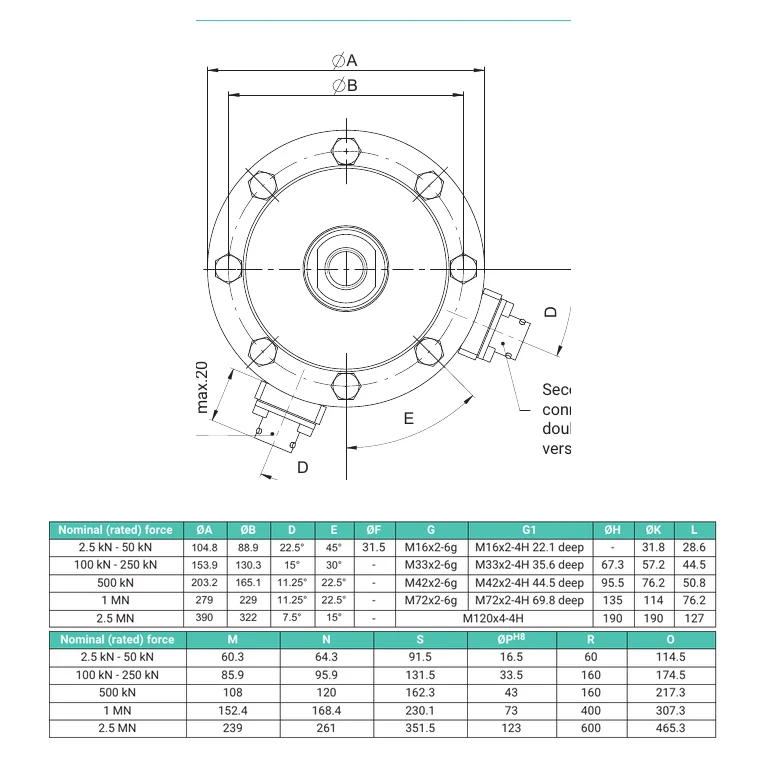
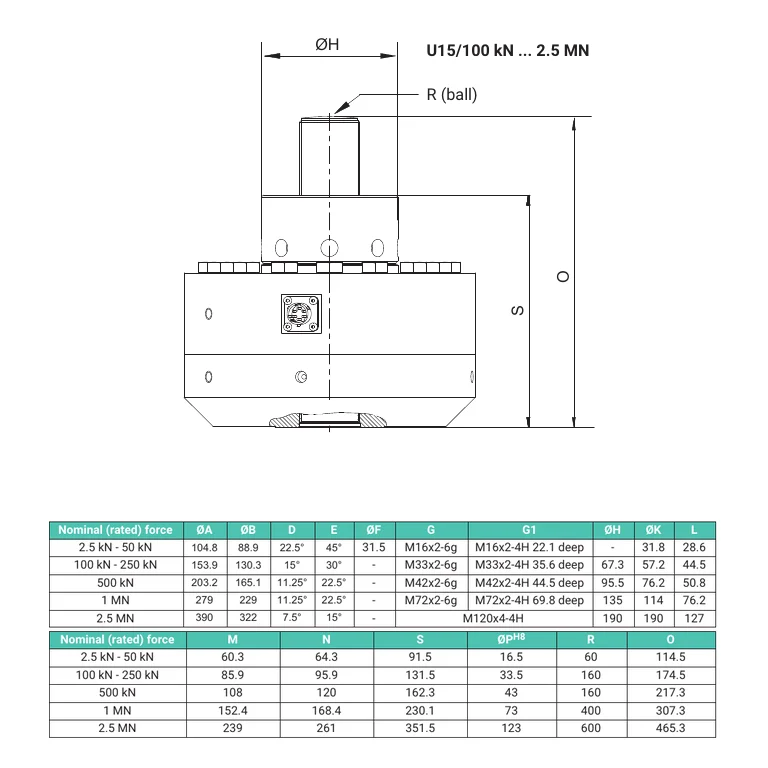
Shared technical specifications for the series
Properties every model in the series has. What differs is in the models table below.
Range across models
The span covered by the models of the series together — not the range of each model.
| ADC sampling rate | 450–40000 samples/s |
|---|---|
| Force range | -2500000–2500000 N |
Models in the series
One column per model: what differs between the models of the series.
| Parameter | U15 | U15-1000kN | U15-100kN | U15-10kN | U15-2500kN | U15-250kN | U15-25kN | U15-2p5kN | U15-500kN | U15-50kN | U15-5kN |
|---|---|---|---|---|---|---|---|---|---|---|---|
| Outputs and interfaces | Unknown | RS422 / RS485 | Digital I/O | RS422 / RS485 | RS422 / RS485 | Digital I/O | Analog 0-10V | RS422 / RS485 | Digital I/O | Analog 0-10V | RS422 / RS485 |
| Technical specification details | Configurable family; exact public ordering-code table not exposed on the current HBK page. | 1000 kN rated capacity = 1,000 kN (101.9716 t mass equivalent at standard gravity); compression and tension | 100 kN rated capacity = 100 kN (10.1972 t mass equivalent at standard gravity); compression and tension | 10 kN rated capacity = 10 kN (1.0197 t mass equivalent at standard gravity); compression and tension | 2500 kN rated capacity = 2,500 kN (254.9291 t mass equivalent at standard gravity); compression and tension | 250 kN rated capacity = 250 kN (25.4929 t mass equivalent at standard gravity); compression and tension | 25 kN rated capacity = 25 kN (2.5493 t mass equivalent at standard gravity); compression and tension | 2.5 kN rated capacity = 2.5 kN (254.9291 kg mass equivalent at standard gravity); compression and tension | 500 kN rated capacity = 500 kN (50.9858 t mass equivalent at standard gravity); compression and tension | 50 kN rated capacity = 50 kN (5.0986 t mass equivalent at standard gravity); compression and tension | 5 kN rated capacity = 5 kN (509.8581 kg mass equivalent at standard gravity); compression and tension |
| Interfaces | Not specified | EtherCAT | Ethernet | EtherCAT | EtherCAT | PROFINET | EtherCAT | Ethernet | EtherCAT | Ethernet | Ethernet |
| Sampling rate reference | Not specified | ClipX fixed internal sampling rate; verify the configured filter and usable output bandwidth | MX840B maximum per-channel sample rate; sensor mechanics and filter settings can reduce usable bandwidth | DMP41 selectable result rate, intended for reference and calibration measurements | MX840B maximum per-channel sample rate; sensor mechanics and filter settings can reduce usable bandwidth | MX840B maximum per-channel sample rate; sensor mechanics and filter settings can reduce usable bandwidth | DMP41 selectable result rate, intended for reference and calibration measurements | DMP41 selectable result rate, intended for reference and calibration measurements | MX840B maximum per-channel sample rate; sensor mechanics and filter settings can reduce usable bandwidth | DMP41 selectable result rate, intended for reference and calibration measurements | MX840B maximum per-channel sample rate; sensor mechanics and filter settings can reduce usable bandwidth |
| Accuracy (% FSO) | Not specified | 0.05 % | 0.05 % | 0.05 % | 0.05 % | 0.05 % | 0.05 % | 0.05 % | 0.05 % | 0.05 % | 0.05 % |
| ADC sampling rate | Not specified | 40000 samples/s | 450 samples/s | 40000 samples/s | 450 samples/s | 19200 samples/s | 19200 samples/s | 19200 samples/s | 450 samples/s | 19200 samples/s | 40000 samples/s |
| Force range | Not specified | -1000000–1000000 N | -100000–100000 N | -10000–10000 N | -2500000–2500000 N | -250000–250000 N | -25000–25000 N | -2500–2500 N | -500000–500000 N | -50000–50000 N | -5000–5000 N |
| Status | Active | Active | Active | Active | Active | Active | Active | Active | Active | Active | Active |
The industries we serve
-
-
Aerospace
- Aircraft door-lock position detection
- Airlines & Aerospace Our balancing machines and moment weighing scales for aerospace drives ensure maximum precision, ease of use, and modular flexibility delivering reliability and performance without compromise contributing to your economic success.
- Automatic balancing machines Automatic balancing machines from Schenck are advanced solutions for precise balancing of rotating components in automated production processes. We offer systems and stations for balancing crankshafts, wheels and tires, turbochargers, electric armatures, drives, axle drive units, torque converters, drive shafts, disc-shaped rotors, as well as fans. Our systems increase productivity, ensure consistent quality, and are tailored to the needs of the automotive, energy, and industrial sectors.
-
Medical industry
-
Environment
-
Electric motor manufacturing
-
Food industry
-
Automotive industry
- Airlines & Aerospace Our balancing machines and moment weighing scales for aerospace drives ensure maximum precision, ease of use, and modular flexibility delivering reliability and performance without compromise contributing to your economic success.
- Automatic balancing machines Automatic balancing machines from Schenck are advanced solutions for precise balancing of rotating components in automated production processes. We offer systems and stations for balancing crankshafts, wheels and tires, turbochargers, electric armatures, drives, axle drive units, torque converters, drive shafts, disc-shaped rotors, as well as fans. Our systems increase productivity, ensure consistent quality, and are tailored to the needs of the automotive, energy, and industrial sectors.
- Axle Drives With our balancing machines for front and rear axle transmissions, the measured unbalance is corrected by drilling into the drive flanges of the transmissions (welding optional). We support you with our interdisciplinary expertise in the production of front and rear axle transmissions from the initial idea to the design stage through to series production.
-
Industrial automation
-
Plastics
-
Optics
-
3D printing
-
Battery manufacturing
Frequently asked questions
Answers to the most common questions about our products and services
Yes. U15 measures tensile and compressive forces and serves as a reference transducer in calibration machines and test systems.
An optional double bridge can provide one reference signal and a second signal for machine control. It is an ordering configuration.
Class 0.5 is specified from 10% to 100% of nominal force. This class is not a single error percentage.
Yes. HBK offers U15 measurement-chain calibration with an amplifier, subject to the ordered configuration and calibration service.
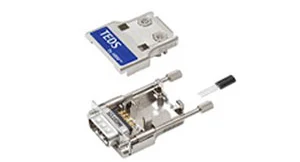
When TEDS is ordered on the double-bridge version, each bridge has its own identification data. Assign each amplifier input to the corresponding bridge and sensitivity instead of assuming one identification record describes both channels.
Get a quote or advice
Tell us what you need and an engineer will come back to you.
Request a quote for this product